



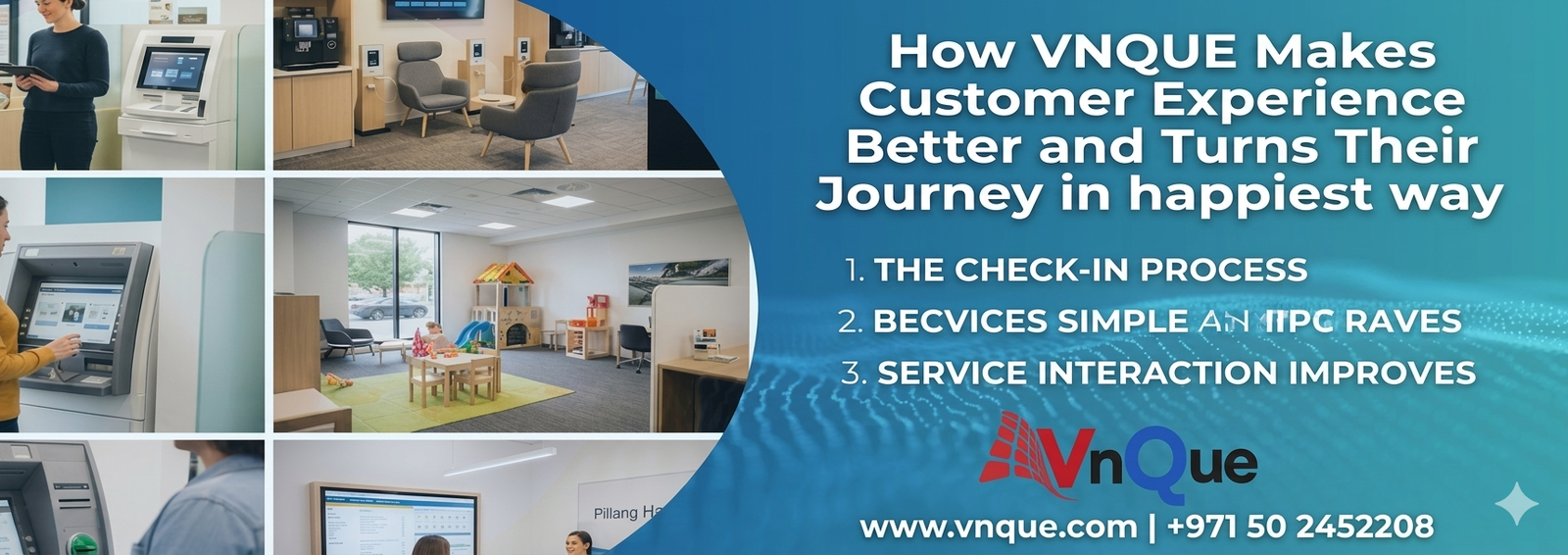
Beyond the Digital Screen: Why Branch Efficiency Hinges on Smarter Queue Management 🏦📈
The Hook: Mobile banking handles the routine, but when customers need financial advice, complex loans, or relationship building, they still walk into a physical bank branch.
The problem? They often walk right into a bottleneck. Long wait times, uneven teller workloads, and chaotic lobbies aren’t just annoying—they active drive away business and tank employee morale. In fact, unstructured wait times are one of the quietest revenue killers in retail banking.
For banks committed to modernizing their operations, intelligent customer routing is no longer a luxury. It is a foundational requirement. Enter VNQUE.
1. From Guesswork to Intelligent Routing
In a traditional branch, customers guess which line to join. Tellers face uneven workloads—some are buried under complex transactions while highly skilled specialists sit idle.
VNQUE takes routing decisions out of the customer’s hands and automates them using real-time data. When a customer checks in via a lobby kiosk or mobile device, the system instantly analyzes staff availability, teller skill sets, and customer needs to auto-route them to the optimal counter. This smart balancing acts as a powerful teller optimization tool, saving up to 20–25% in processing time.
2. Shrinking the “Perceived” Wait Time
Wait time is the single greatest driver of customer satisfaction. When people stand in physical lines without knowing when they will be served, anxiety spikes.
With VNQUE, physical lines are replaced by digital tickets and virtual queuing. Customers can sit comfortably, check their phones, or even grab a coffee down the street while tracking their exact place in line via real-time mobile updates. By introducing complete transparency, the perceived wait time drops drastically, turning a frustrating chore into a smooth experience.
3. Merging Appointments with Walk-In Traffic
The modern branch operates on a hybrid model. Customers expect to book a mortgage or investment consultation online, just like booking a restaurant table.
The VNQUE platform seamlessly bridges the gap between digital bookings and walk-in traffic. When a scheduled customer arrives, the system recognizes them instantly and moves them to the front of the specialist’s queue without disrupting the flow of walk-in visitors.
4. Moving Routine Tasks to Self-Service
Not every branch visit requires human intervention. Simple balance inquiries, statement printing, or quick document drops can easily be digitized. By integrating self-service kiosks with the VNQUE ecosystem, branches can offload routine traffic. This instantly relieves lobby congestion, freeing up human staff to focus on high-value conversations that actually generate revenue.
5. Transforming Data into Predictive Staffing
You cannot optimize what you do not track. VNQUE provides bank managers with a goldmine of live operational analytics:
- Pinpoint peak traffic hours to staff counters perfectly.
- Identify which transaction types cause bottlenecks.
- Measure precise teller service rates to optimize training.
Instead of reactively managing a crowded lobby, branch managers can use predictive data to plan their weeks ahead.
The branch of the future is smaller, highly automated, and focused on advisory services. But that digital transformation fails if the physical doorstep remains stuck in the past. Implementing VNQUE is a direct investment in customer loyalty, staff retention, and bottom-line productivity.
Is your financial institution ready to trade lobby chaos for data-driven efficiency? Let’s connect to see how VNQUE can modernize your branch network.
#FinTech #BankingInnovation #BranchTransformation #CustomerExperience #VNQUE #OperationsEfficiency
Tags:
Share: